Early detection of ASF: comparing sampling strategies in growing pig farms
Jason A. Galvis a,1 , Aniruddha Deka a,1 , Gustavo Machado a,b,c
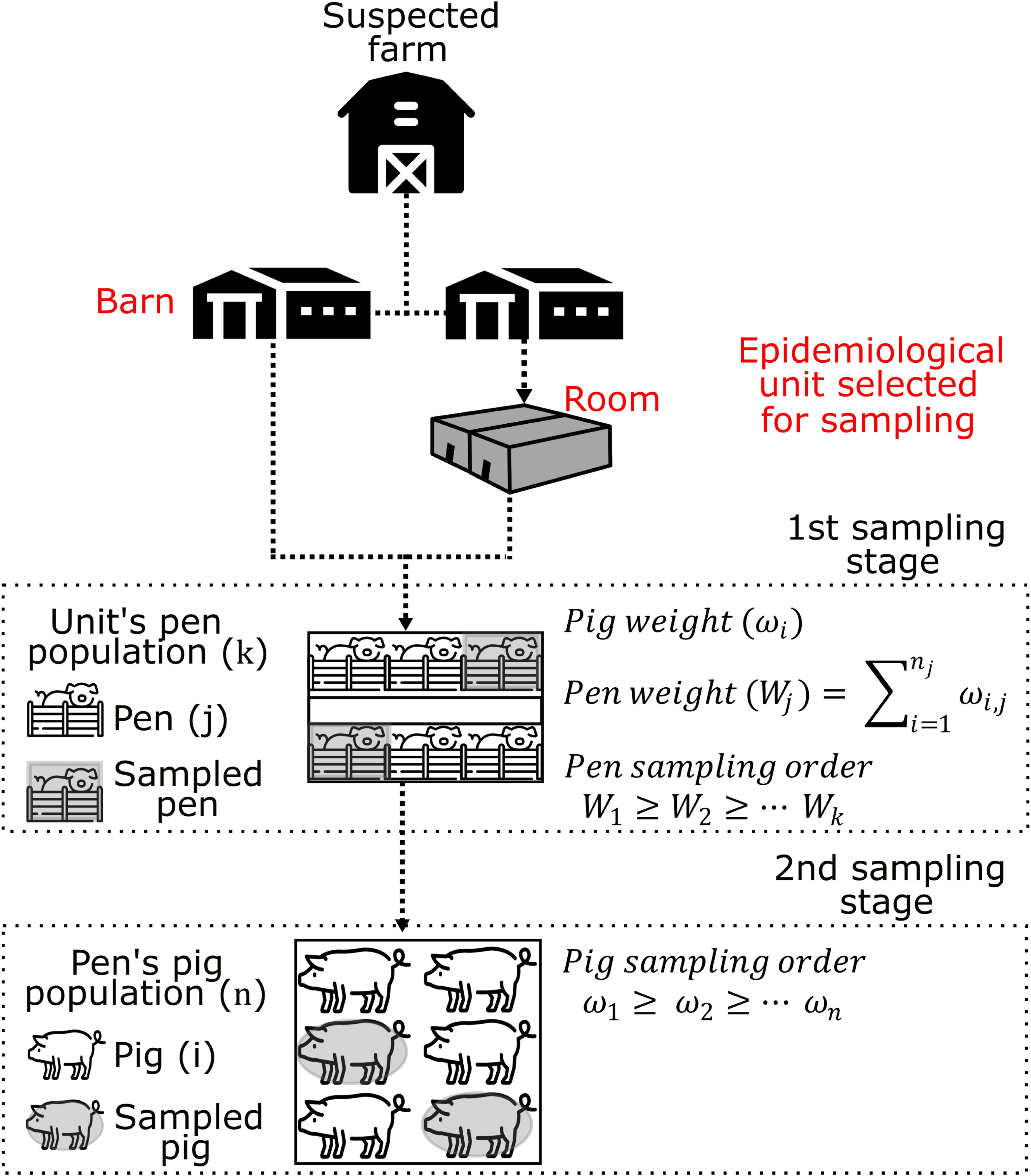
Early detection of African swine fever virus (ASFV) is critical to preventing widespread epidemics. However, the effectiveness of within-farm sampling remains to be examined, particularly during the early phase of an outbreak when disease prevalence is low, animals may be asymptomatic, or clinical signs are masked by co-circulating diseases. This study assessed four sampling strategies for detecting ASFV-infected animals in suspected growing pig farms within the first 14 days of the introduction of either a high- or moderate-virulence ASFV strain. Pens were selected using three methods: random sampling, targeted sampling of pens with clinical animals, and informative sampling based on estimated pen infection probabilities. The informative sampling method was further divided into sequential method, which ranked pens by descending viral load probability, and cluster & random method, which selected pens at random from high and low viral load clusters. Each pen-selection method was examined with different sample sizes. We calculated the sensitivity of each approach as the probability of detecting at least one ASFV-positive pig per farm. Results showed that sampling 30 pens with one pig per pen using the target & random pen-selection method yielded the highest detection sensitivity, even in the presence of other co-circulating diseases that interfere with the accurate identification of clinical ASFV cases. In contrast, sampling five pens resulted in the lowest sensitivity. These findings provide valuable insights for improving ASFV surveillance strategies in the U.S. and can inform preparedness efforts for other foreign animal diseases.