Modeling the impact of multiple transmission routes of African swine fever in a barn
Aniruddha Deka a , Jason A. Galvis a , Christian Fleming a,c , Maryam Safari b , Chi-An Yeh b , Gustavo Machado a
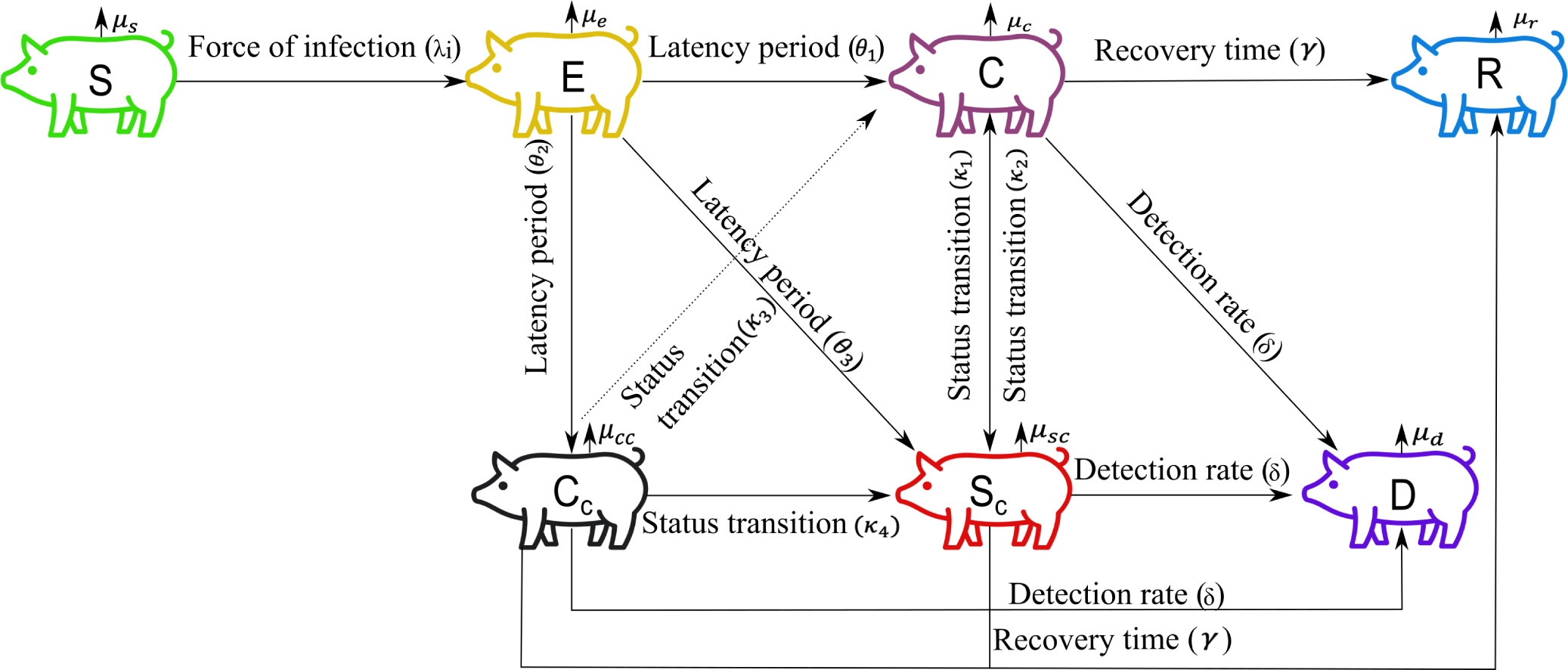
The transmission of African swine fever virus (ASFV) within swine barns occurs through direct and indirect pathways. Identifying and quantifying the roles of ASFV dissemination within barns is crucial for developing disease control strategies. We created a stochastic transmission model to examine the ASFV dissemination dynamics through transmission routes within commercial swine barns. We consider seven transmission routes at three disease dynamics levels: within-pens, between-pens, and within-room transmission, along with the transfer of pigs between pens within rooms. We simulated ASFV spread within barns of various sizes and layouts from rooms with a median of 32 pens (IQR: 28-40), where each pen housed a median of 34 pigs (IQR: 29-36). Our model enables tracking the viral load in each pen and monitoring the disease status at the pen level. Results show that between-pen transmission pathways exhibited the highest contribution in spread, accounting for 66.76%, whereas within-pen and within-room pathways account for 26.12% and 7.12%, respectively. Nose-to-nose contact between pens was the primary dissemination route, comprising an average of 46.04%. On the other hand, aerosol transmission within pens had the lowest contribution, accounting for less than 1%. Furthermore, we show that the daily transfer of pigs between pens did not impact the spread of ASFV. On average, at the room level, the combined approach of passive daily surveillance and mortality-focused surveillance enabled ASFV detection within 18 (IQR: 16-19) days. The model allows us to monitor the viral load variation across the room over time, revealing that most of the viral load accumulates in pens closer to the exhaust fans after a month. This work significantly deepens our understanding of ASFV spread within commercial swine production farms in the U.S. and highlights the main transmission pathways that should be prioritized when implementing ASFV countermeasure actions at the room level.